Verification research
What Is Okki Go? A 7-Step Workflow Checklist for Outbound Agencies
2026-09-14 · Julian Hartwell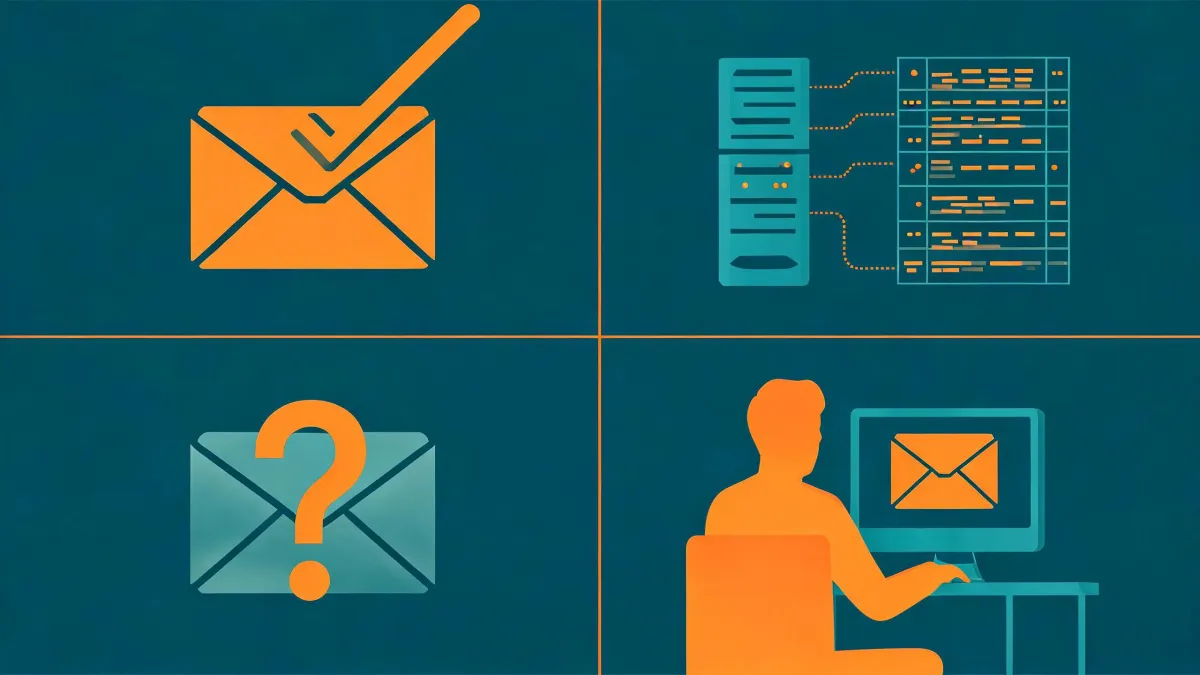
-
What Is Okki Go, and What Isn't It?
-
When to Use This Checklist
-
Step 1: Lock the ICP and Suppression List Before Sourcing
-
Step 2: Build the Account List Inside Okki Go
-
Step 3: Use the LinkedIn Email Finder with Waterfall Enrichment
-
Step 4: Run Email Verification Features in the Right Order
-
Step 5: Enrich with Intent Data and One Real Personalization Signal
-
Step 6: Set Human-in-the-Loop Outreach Rules
-
Step 7: Measure, Suppress, and Refresh
-
What RevOps Teams Should Evaluate in Account-Based Marketing
-
Common Mistakes in Okki Go Workflows
If you're a RevOps lead, SDR manager, or outbound agency owner trying to launch an ABM campaign in the next 48 hours, this checklist is for you. I work in RevOps at a B2B outbound agency. I've handled 300+ rushed campaign launches, including same-day list rebuilds for SaaS clients. The steps below are what I use when I need a clean Okki Go workflow without pretending email verification is magic. Seven steps. Checkpoints included.
What Is Okki Go, and What Isn't It?
Okki Go is an agent-native prospecting workflow for outbound teams. In plain terms (i.e., not another dashboard to babysit), it connects lead sourcing, LinkedIn email finder, waterfall enrichment, intent data, and email verification features into a human-in-the-loop outreach process. It doesn't replace your SDRs or RevOps team. It doesn't guarantee replies, meetings, or perfect deliverability. Anyone selling that is selling noise.
The question everyone asks is, can it find more emails? The question they should ask is, can it find the right emails, verify them sanely, and keep our domain safe? That's the whole game.
When to Use This Checklist
Use this when you're building an ABM or outbound sequence for a small, high-value account list. Use it when an agency client approves a campaign late, when your current list has bounce risk, or when RevOps asks what to evaluate in account-based marketing beyond job titles. Don't use it as a spray-and-pray volume play. Bad fit.
Step 1: Lock the ICP and Suppression List Before Sourcing
Most teams start with sourcing. That's backwards. Start with who you must not contact: current customers, open opportunities, recent opt-outs, hard bounces, active sequences, and any account your legal team flagged. Then define your ICP: 3-5 firmographics and 2-3 buying signals. No more. If your ICP has 14 filters, you don't have an ICP. You have a wish list.
Checkpoint: export the suppression list and timestamp it. I only believed suppression-first after ignoring it once and having to rebuild a 4,200-row list in 90 minutes. Not fun.
Step 2: Build the Account List Inside Okki Go
Import target accounts into Okki Go, then tier them. Tier A gets manual review. Tier B gets automated checks. Tier C gets a verification pass and a smaller sequence. Use intent data filters where they make sense, but don't stack five intent topics just to look sophisticated. A clean 150-account list beats a messy 2,000-account list for ABM.
Checkpoint: every account needs an owner and a reason for being in the list. If you can't explain the reason in one sentence, cut it.
Step 3: Use the LinkedIn Email Finder with Waterfall Enrichment
For each account, search by title, function, and seniority. The LinkedIn email finder is useful, but don't trust one source. Run waterfall enrichment: try multiple providers in sequence until you get a match. Log the source and confidence score for every email. This is the part agencies skip when they're rushing, and it's the part that saves you later.
Checkpoint: separate personal emails from role-based emails (info@, sales@, admin@). Role-based addresses can work for some sequences, but they're not the same as a named contact. Treat them differently.
Step 4: Run Email Verification Features in the Right Order
Verification isn't one check. It's a sequence: syntax, domain and MX records, disposable domain detection, role-based detection, catch-all detection, and SMTP-level checks where possible. Your email verification features should give you categories, not just valid or invalid. I want valid, risky, catch-all, unknown, and invalid. Catch-all is not valid. It's a maybe. Maybe burns domains.
Per FTC advertising guidelines, claims must be truthful and substantiated. So when a vendor says perfectly accurate, ask for evidence. You won't get it. No verification tool can guarantee inbox placement, because deliverability depends on sender reputation, content, volume, and recipient behavior.
Checkpoint: before sending, review all catch-all and risky addresses manually. If a contact is high-value, find a second source. Saved $40 by skipping a verification pass once. Ended up spending two weeks fixing a warmed domain. Net loss: way more than $40.
Step 5: Enrich with Intent Data and One Real Personalization Signal
Intent data is only useful when it's recent and tied to a person. A company downloaded a whitepaper eight months ago? That's history, not intent. Look for recency, topic relevance, and source. Then give each contact one trigger: a funding event, a new exec, a product launch, a hiring spike, or a relevant LinkedIn post. One. Not five.
Checkpoint: if you can't write a one-line reason to reach out, don't send. Note to self: this check would have saved me from at least three awkward follow-ups.
Step 6: Set Human-in-the-Loop Outreach Rules
This is where Okki Go workflow for outbound agencies either works or becomes a spam machine. Let AI SDR tools draft. Let humans approve. For the first 20 sends, review every message. After that, spot-check daily. Enterprise accounts and C-level contacts should always get manual approval. Personalization can't be a merge field pretending to be a compliment.
Checkpoint: define a reply-handling SLA. If someone replies, a human responds within one business day. Automated follow-ups should stop immediately after a reply. Anything else damages the brand.
Step 7: Measure, Suppress, and Refresh
Watch bounce rate, reply rate, positive reply rate, meetings booked, and pipeline created. Also watch domain reputation and complaint rate. After 50 sends, review the sequence. After 200 sends, review the list source and intent filters. Suppress anyone who bounced, opted out, or replied negatively. Then refresh the list monthly, not quarterly.
Checkpoint: if bounce rate rises above your baseline, stop sending and fix the list. Don't push through. That's how a small data problem becomes a deliverability problem.
What RevOps Teams Should Evaluate in Account-Based Marketing
So what should revenue operations teams evaluate in account-based marketing? Start with these questions:
- Where did the data come from, and can we audit it?
- How often is the data refreshed?
- Does enrichment use a waterfall, or a single provider?
- How does verification classify catch-all and risky emails?
- How recent is the intent signal, and what triggered it?
- Can we sync suppression lists both ways with the CRM?
- Who owns reply handling, and what is the SLA?
- Are there logs for exports, sends, and changes?
The question isn't which tool has the most contacts. It's which workflow can we audit when a VP asks why we emailed a churned customer. That's what RevOps should evaluate in account-based marketing: not just reach, but control.
Common Mistakes in Okki Go Workflows
Mistake 1: skipping suppression. Mistake 2: treating catch-all as valid. Mistake 3: using stale intent as a trigger. Mistake 4: letting AI send without human review. Mistake 5: measuring opens as a success metric. Mistake 6: refreshing lists only when someone complains. Mistake 7: promising leadership guaranteed reply rates. Don't do that. It's not real.
I'd rather spend 20 minutes explaining verification categories to a client than 20 days managing a deliverability issue. An informed customer asks better questions and makes faster decisions. That's the point of customer education, and it's also how you build an outbound workflow that survives contact with reality.

Julian Hartwell
Julian Hartwell is an independent B2B sales intelligence analyst covering contact databases, company data, decision-maker profiles, direct dials, prospect lists, and buying signals. He applies the ISO/IEC 25012 data-quality model while examining field accuracy, coverage, freshness, duplicate rate, match confidence, and source transparency. His evidence-led guides help revenue teams compare prospecting platforms, define acceptable data thresholds, and build account lists that support reliable territory planning and outreach.