Verification research
What Is a Sales Trigger? A B2B Guide for Teams Who've Already Wasted Money Guessing
2026-09-30 · Victor Okeke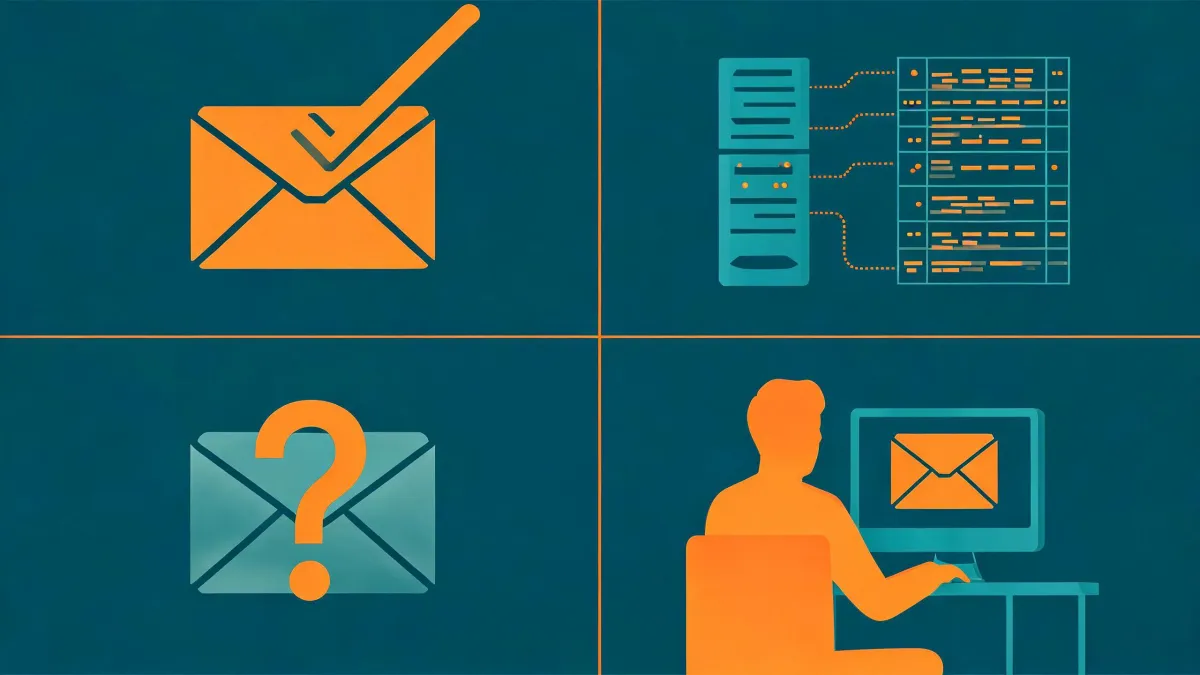
-
What Is a Sales Trigger? A Definition I Actually Trust
-
First, the Thing Nobody Tells You About "Sales Triggers"
-
Scenario A: Small Team (2–15 Sellers) Still Chasing a Repeatable Playbook
-
Scenario B: Scaling Team (15–80 Sellers) Where Coverage Is the Problem
-
Scenario C: Enterprise or Long Multi-Stakeholder Cycles
-
How to Figure Out Which Scenario You're Actually In
What Is a Sales Trigger? A Definition I Actually Trust
A sales trigger is a detectable change in a prospect's situation that creates — or reveals — a reason to talk now instead of in six months.
Job change. Funding round. New VP of Sales hire. Hiring spike in one department. Product launch. Tech stack swap. Competitor churn signal.
The list is long. The usefulness varies wildly.
Here's the thing: every vendor selling intent data will tell you triggers are the secret to modern outbound. That's partly true and partly marketing. I've been running outbound and RevOps for nine years. I've documented eleven significant mistakes in that time, and I'd put the total wasted budget at roughly $34,000. Most of that money died under the banner of "trigger-based outreach."
In 2022, I spent $2,300 on a trigger-tagged list from a vendor I won't name. 4,000 contacts. Reply rate: 0.3%. Twelve replies for the price of a decent used car.
The trigger wasn't the problem. The list was. Nobody had verified those emails in six months, and I didn't check before sending.
So let me skip the theory. I'm going to give you three branches. Pick the one that matches your team before you pick a tool.
First, the Thing Nobody Tells You About "Sales Triggers"
Everything I'd read about sales triggers said they were universal — that every team, at any size, should build a trigger-based motion. In practice, I've found the opposite. For some teams, triggers are the highest-ROI signal in the stack. For others, they're an expensive distraction from fixing basic list quality.
It's tempting to think a sales trigger is just a data point. But a trigger without a verified contact and a clear angle is just noise with a timestamp. ZoomInfo, Apollo, and the pile of intent-data vendors all sell some version of this. The signal itself is cheap now. The work is in the filter.
So the real question isn't "what is a sales trigger." It's "what kind of team are you right now, and which trigger strategy actually fits?"
Scenario A: Small Team (2–15 Sellers) Still Chasing a Repeatable Playbook
If you're under fifteen sellers and you haven't yet cracked a repeatable outbound play, triggers are mostly a trap.
I get pushback on this. It sounds like heresy in 2025. But here's what I've watched happen with three different seed-to-Series-A teams: they buy expensive intent data, they build beautiful trigger-based sequences, and then they send 300 emails to people whose company just raised a round — without any angle beyond "congrats on the funding."
The reply rate is usually under 1%. The pipeline cost per meeting runs into the hundreds of dollars.
What actually works at this size is boring. Build a clean contact database of 300–500 accounts that look exactly like your best three customers. Verify every email before you send. Then write something specific. Not trigger-driven — customer-driven.
The penny-wise move: skip the $1,500/month intent platform for a quarter. Spend it instead on an email verification pass across your existing list and a good enrichment tool. Save $1,000 by not buying the shiny trigger feed. Spend $400 cleaning the data you already have. The reply-rate math usually flips in your favor within two weeks.
Once you have a sequence that returns 4–6% positive reply rate on 500 contacts, then add triggers. Not before.
Scenario B: Scaling Team (15–80 Sellers) Where Coverage Is the Problem
This is where triggers start doing real work. And this is where I've seen the biggest difference between teams that execute well and teams that don't.
At this stage, you usually have a working playbook. What you don't have is enough signal volume to keep 30 reps busy with personalization. That's the coverage problem.
Here, trigger-based prospecting is not optional. It's how you scale without hiring 20 more SDRs.
A few things I've learned doing this at two different Series B companies:
- Pick two or three triggers, not ten. The teams that try to monitor job changes, funding, hiring, product launches, tech installs, and competitor mentions all at once end up with a mess nobody trusts. Pick the two that historically correlate with closed-won in your CRM. Only those.
- Waterfall enrichment matters more than trigger quality. A great trigger tied to a bounced email is worthless. At this scale I run every trigger contact through at least two enrichment sources plus verification before it hits a sequence. Yes, it's more work. It's also the difference between 8% and 1% reply rates.
- Human-in-the-loop beats full automation. Every fully automated trigger sequence I've run has underperformed the version where a rep reads the trigger note and adds one sentence. Fifty reps writing one real sentence each is still more than 90% of your competitors are doing.
Tools like Okki Go, and to a lesser extent Hunter, sit in this lane. If you're comparing them: Okki Go skews toward agent-native prospecting with waterfall enrichment and intent baked into the workflow. Hunter is strong on single-email lookups and verification. Neither is a magic solution — the trigger quality still rides on how you've defined it in your CRM.
The mistake I made here in September 2022 was over-engineering. I built a 14-trigger scoring model. My team ignored it within six weeks because it was too complex to actually use at the pace of an SDR shift. Simpler won.
Scenario C: Enterprise or Long Multi-Stakeholder Cycles
Trigger strategy looks different at this level, and most of the advice you'll read online doesn't apply.
If your average deal cycle is over 90 days and touches four or more stakeholders, a single "trigger event" doesn't move much. What matters is trigger stacking — the accumulation of signals over time that tells you an account is genuinely in-market.
Conventional wisdom says to act on every trigger. My experience with 400+ enterprise accounts says wait for the second or third signal in a 60-day window. One job change is a coincidence. A new VP of Sales, plus a hiring spike in sales ops, plus a competitor announcement within eight weeks is a conversation worth having.
At this level you also need to think about trigger cadence — mapping when the trigger fires to how long your sales cycle actually runs. I've seen teams react to a funding trigger eight months after the round closed. At that point the trigger is just trivia.
How to Figure Out Which Scenario You're Actually In
Three questions. Answer honestly.
- Do you have a sequence that already returns 4%+ positive reply on a clean 500-contact list? If no, you're in Scenario A. Fix that first.
- Is your bottleneck signal volume or signal quality? If you have plenty of signals but low reply rates, you're in B. If you have plenty of quality but can't find enough accounts, you're also in B — just at the other end.
- Is your sales cycle over 90 days with multiple stakeholders? If yes, you're in C. Stack signals. Don't chase singles.
Real talk: most teams think they're in C when they're actually in A. Enterprise framing is more flattering. But the execution requirements are totally different, and getting this wrong is expensive.
If you take one thing from this: sales triggers amplify whatever your outbound motion already is. They don't fix a broken one. Get the foundation right, then layer triggers on top.
Otherwise you'll be writing a post like this one in three years, and the number won't be $34,000.

Victor Okeke
Victor Okeke is an independent sales technology procurement analyst covering lead-generation software, contact data platforms, email verification, AI prospecting tools, sales engagement systems, enrichment services, and CRM integrations. He reviews ISO/IEC 27001 and ISO/IEC 27701 evidence alongside data rights, retention, export controls, uptime, usage limits, implementation effort, cost per validated contact, and contract terms. His buying guides help revenue and procurement teams compare pricing, trials, integrations, governance, and measurable value before committing to a platform.