Verification research
Smartlead vs Findymail: Why Small B2B Teams Shouldn't Have to Pick
2026-08-19 · Julian Hartwell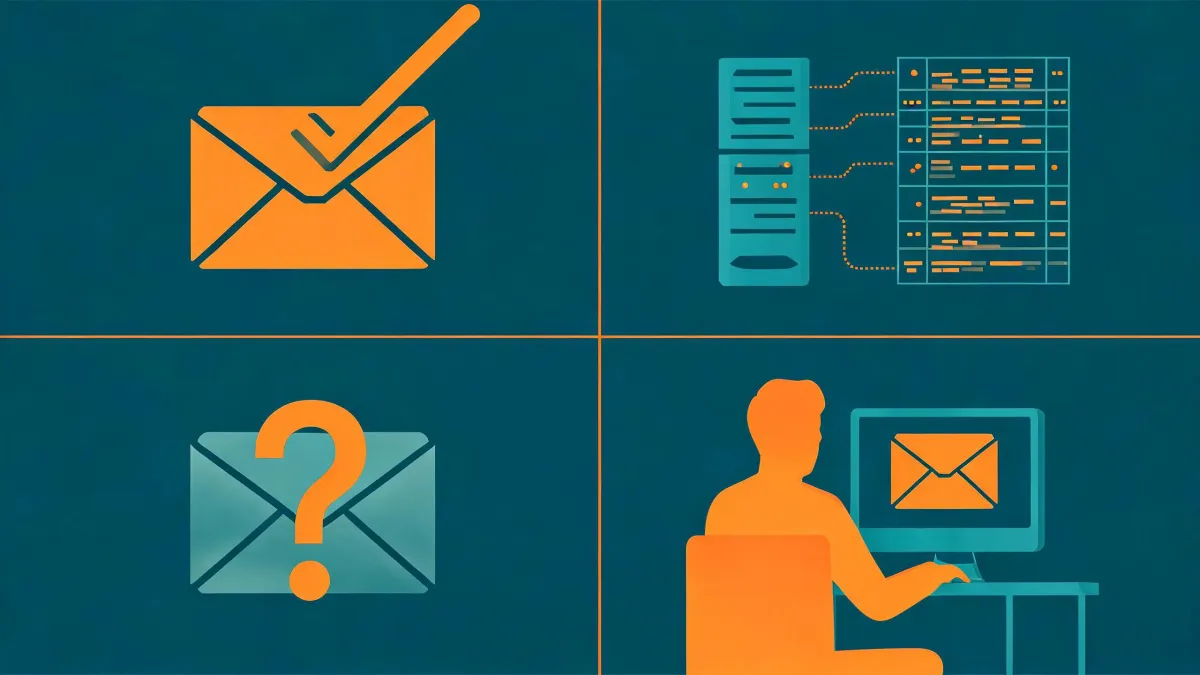
-
The false choice: Smartlead vs Findymail
-
Email warmup: the un-sexy thing that actually determines deliverability
-
What “sales intelligence platform features” should actually mean for a small team
-
What is an autonomous SDR, and when should a B2B sales team use it?
-
Findymail pricing: the small-team wake-up call
-
The “but is Findymail too basic?” objection
-
Small friendliness isn't a feature; it's a signal
-
The bottom line
If you're a small B2B team trying to decide between Smartlead and Findymail, you're asking the wrong question. When I say that, I do not mean you're missing some obvious answer. I mean the question itself is tempting because both tools sit in the same part of your sales stack. But they don't do the same job.
The right question is: do I have verified email addresses, and will my messages actually land?
I'm not saying this as someone who has outbound figured out. I'm the person who broke our sender reputation twice, wasted roughly $14,000 on bad lists and flashy tools, and now keeps a checklist so nobody else repeats my mistakes. I've run outbound for a 12-person agency since 2019, and I've personally made enough errors to fill a small CRM. It took me one $3,200 mistake and one burned domain to understand that data and deliverability come before any automation.
Here's the thing I wish someone had told me: Smartlead and Findymail solve different problems. Choosing between them makes as much sense as choosing between an oven and a grocery store. You need both, but only when you know what each is for.
The false choice: Smartlead vs Findymail
Smartlead is a sending platform. It helps you send cold email campaigns, manage reply rotations, and warm up inboxes. Findymail is a data tool. It finds and verifies B2B email addresses so you are not sending to dead accounts. One gets your message out. The other makes sure it has a real chance of being received by the right person.
Most small teams start in the wrong place. They buy the sending tool first, then they go looking for contacts. That was my mistake. In my first year (2019), I signed up for an outreach platform, plugged in a purchased list of 5,000 contacts, and hit send. It looked fine on my screen. The result came back as a wave of hard bounces, then even more soft bounces, and eventually a sender reputation we had to repair over the next month. 5,000 records, $3,200 in wasted budget, plus a long week of apologies to our account manager. That's when I learned: list size is vanity, verification is sanity.
Now we run every list through Findymail before it touches an automation. The finder finds the people you need; the verifier kills the dead addresses before they hurt you. The API means our ops team can build email verification into the lead pipeline instead of doing weekly CSV exports.
Email warmup: the un-sexy thing that actually determines deliverability
From the outside, cold email looks like writing good copy and hitting send. The reality is it's mostly infrastructure: SPF, DKIM, sending limits, and warm-up. It's not glamorous, but it's the difference between a conversation and a spam folder.
In September 2022, I switched to Smartlead and set up the email warmup feature. I thought it would work automatically. It didn't. I attached a brand-new domain to 300 outbound emails a day and learned what 'spam folder' really means after the first week. The warmup feature can only do its job if you respect the process (unfortunately, it's not a magic button). Start slow, send manually to engaged contacts first, and scale gradually. Trust me on this one: a warm inbox is worth more than any sequence feature.
Here's what I tell our new reps: the right stack is verified data (Findymail), a sending platform (Smartlead or whatever fits your budget), email warmup, then scale. Get that order wrong and you'll spend months fixing what should have taken days.
What “sales intelligence platform features” should actually mean for a small team
Let's talk about sales intelligence platform features, because the term sounds impressive but it doesn't tell you what matters. For a small B2B team, the only features that matter are:
- An accurate email finder, not just a giant database of unverified guesses.
- Verification at the point of capture, so bad data never enters your pipeline.
- An API so you can automate and connect the data to your actual workflow.
- Integration with LinkedIn Sales Navigator, because that's where your prospects are.
- Pricing that doesn't punish you for being small.
Findymail covers all of these without charging for seats we never use. For a 12-person agency, that's not a minor advantage. It is the difference between a tool that pays for itself and a line item that gets questioned at every budget review.
What is an autonomous SDR, and when should a B2B sales team use it?
An autonomous SDR is an AI agent that researches leads, writes personalized emails, follows up, and occasionally books meetings without a human rep in the loop. It sounds perfect for a small team that can't hire a full-time salesperson. It isn't, at least not yet.
Use an autonomous SDR when you have three things:
- Clean email data. Otherwise you are automating garbage.
- Warmed-up sending infrastructure. Otherwise you are automating your way into a blacklist.
- A documented sales process and a clear ICP. If you cannot explain what a qualified lead looks like in one sentence, an autonomous SDR will just fail faster for you.
From my own expensive experience, the order matters. First fix your email data with Findymail. Then prove your outreach works manually. Then add automation. An autonomous SDR should multiply a working process, not replace the need to build one.
Findymail pricing: the small-team wake-up call
Let's be honest about findymail pricing. It doesn't look like the rest of the sales software market. There's no per-seat requirement, no five-user minimum, no sales call to find out the real price. You buy credits for email finds and verifications, and that's basically it. When I compared public pricing pages for six sales intelligence platforms in January 2025, the contrast was striking: many require a yearly commitment and a floor of users you'll never use. Findymail treats a two-person startup and a fifty-person team the same way. That's rare and, frankly, refreshing.
The “but is Findymail too basic?” objection
Honestly, I understand why someone would ask that. Findymail won't write your emails, manage your campaigns, or replace your sales team. It does one thing extremely well: it makes sure you are emailing real people at the right addresses. That is the foundation of every email campaign, regardless of whether you're in the Smartlead camp or the Findymail camp.
There will always be shinier tools with more features. But the tools that matter are the ones that make the first 1,000 conversations worth having. A better sequence won't save a bad list. Findymail won't need to look fancy if it's cleaning your data and keeping your domain out of the spam folder.
Small friendliness isn't a feature; it's a signal
I've spent too much time being the small client who gets ignored. When I was starting out, vendors who treated our $200 orders seriously are the ones I still use for $20,000 orders. Same applies to software. Buy from companies that make you feel like a customer, not a nuisance. Findymail does that.
Small doesn't mean unimportant. It means potential. And tools that respect that are the ones you'll stick with when you grow.
The bottom line
Stop asking Smartlead vs Findymail. Ask: do I know who I'm emailing, and will my emails land? Once you have clean, verified data and a warm inbox, you can pick any sending platform. After that, if you've built a repeatable process and want to scale, consider an autonomous SDR.
I still maintain a checklist. It's shorter now: verify with Findymail, warm up your inbox, send, review, repeat. That's how you avoid the mistakes I made, and it's how you build outbound that doesn't fall apart the first time something goes wrong.

Julian Hartwell
Julian Hartwell is an independent B2B sales intelligence analyst covering contact databases, company data, decision-maker profiles, direct dials, prospect lists, and buying signals. He applies the ISO/IEC 25012 data-quality model while examining field accuracy, coverage, freshness, duplicate rate, match confidence, and source transparency. His evidence-led guides help revenue teams compare prospecting platforms, define acceptable data thresholds, and build account lists that support reliable territory planning and outreach.