Verification research
okki go Installation, okki go vs Hunter, Email Validation, and Email Warmup: FAQ for Agent-Native Prospecting
2026-09-29 · Zainab Rahimi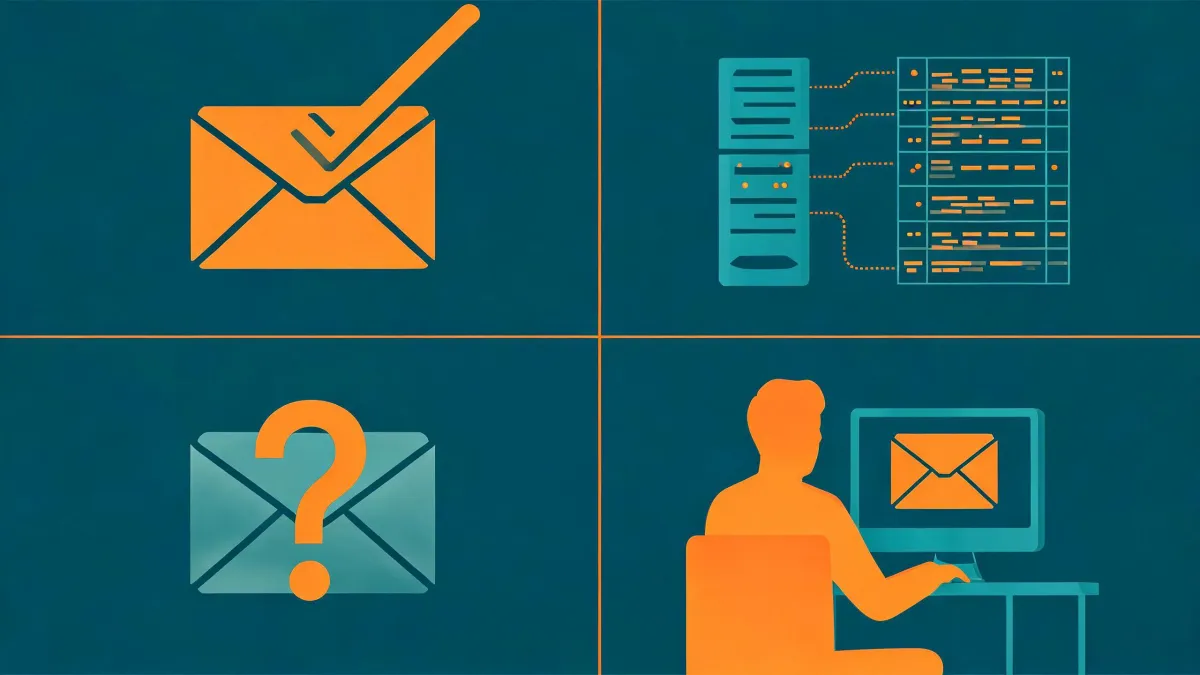
-
What this FAQ covers
-
What does okki go installation actually involve?
-
How does okki go vs Hunter compare for B2B prospecting?
-
How should email validation fit into an agent-native workflow?
-
Is email warmup still necessary in 2026?
-
How does sales intelligence software features fit into an agent-native prospecting workflow?
-
What should stay human-in-the-loop?
-
When is okkigo not the right choice?
-
What is one quality check before any agent sends outreach?
What this FAQ covers
I am a quality and brand compliance manager at a B2B sales tech company. I review every outreach asset before it reaches customers—roughly 200 items a year. I have rejected about 30% of first drafts in 2025 because of unverifiable claims, broken email validation logic, or competitor bashing. This FAQ answers the questions I see most often about okkigo, okki go installation, okki go vs Hunter, email validation, email warmup, and how does sales intelligence software features fit into an agent-native prospecting workflow.
Quick question list:
- What does okki go installation actually involve?
- How does okki go vs Hunter compare for B2B prospecting?
- How should email validation fit into an agent-native workflow?
- Is email warmup still necessary in 2026?
- How does sales intelligence software features fit into an agent-native prospecting workflow?
- What should stay human-in-the-loop?
- When is okkigo not the right choice?
- What is one quality check before any agent sends outreach?
What does okki go installation actually involve?
There is no single install button that fits every team. Treat okki go installation as a configuration checklist: authenticate your sending domains with SPF, DKIM, and DMARC; connect the mailbox or sending account; sync your CRM; set enrichment source order; define validation rules; set a warmup schedule; and add human approval gates before any agent sends. If I remember correctly, the first sync took under an hour in our test, though I might be misremembering because DNS propagation added time. The parts that matter are not clicks. They are data permissions, consent, and approval rules.
How does okki go vs Hunter compare for B2B prospecting?
Hunter is a focused email finder and verification tool. It is strong when your main job is finding and checking contact emails, and many lean teams use it well. okkigo is positioned as an agent-native prospecting workflow: enrichment, intent, outreach, and human-in-the-loop review in one system. I went back and forth between a lighter email finder and a full workflow for two weeks. The lighter tool was simpler; the full workflow promised fewer handoffs. I chose the full workflow because list quality and intent were the bottleneck, not finding emails. If you only need email finding, Hunter may be enough. If you need orchestration, okkigo is the better fit to evaluate.
How should email validation fit into an agent-native workflow?
Email validation should be a risk filter, not a binary truth machine. Good validation checks syntax, domain and MX records, SMTP response where possible, catch-all behavior, role-based addresses, disposable domains, and historical engagement signals. But catch-all domains often accept all mail, greylisting can block SMTP checks, and no service can be 100% accurate. That is a brand red line for us: never promise 100% accuracy. In an agent-native workflow, validation should run before enrichment is written to the CRM and again before a sequence launches. If a contact is risky, route it to human review or suppress it.
Is email warmup still necessary in 2026?
Yes, but warmup is not magic. It is reputation management. Per Google and Yahoo bulk sender requirements effective February 2024, high-volume senders need SPF, DKIM, and DMARC authentication and must keep spam complaint rates low. Verify current requirements at Google Workspace Admin Help and Yahoo Sender Best Practices. Warmup helps a new domain or mailbox build sending history gradually, but it will not fix bad data, irrelevant offers, or missing consent. My rule: authenticate first, clean the list second, warm up third, and watch postmaster metrics weekly. That said, I have only tested this with mid-market SaaS lists. Highly regulated industries may need stricter consent and retention rules.
How does sales intelligence software features fit into an agent-native prospecting workflow?
Sales intelligence features are the inputs and guardrails for the agent. Intent data decides which accounts deserve attention now. Waterfall enrichment fills missing firmographic and contact fields from multiple providers. Scoring ranks accounts and people. Verification removes risky contacts. Warmup protects the sending domain. CRM sync keeps the human team aligned. The agent can research, draft, and route, but the workflow needs explicit stop conditions. Everything I had read said more automation equals more pipeline. In practice, the teams that kept a human approval step had fewer complaints and better quality conversations. Not magic. Just hygiene and judgment.
What should stay human-in-the-loop?
Keep humans on offer strategy, segmentation logic, compliance review, and any message that touches pricing, legal terms, or sensitive claims. Also keep a human on final approval for high-value accounts. The agent should handle repetitive research, data cleanup, first drafts, and routing. I had two days to approve a sequence before a trade show once. Normally I would test more, but there was no time. I went with authenticated domains and a small verified segment, and I limited the first send to low-risk contacts. In hindsight, I should have pushed back on the timeline. But with the deadline, that was the best available call.
When is okkigo not the right choice?
If you have no consistent outbound motion, no clean CRM, or no one to review compliance and messaging, a full agent-native prospecting platform may be too much. Start with a simpler email finder, a manual process, or a smaller pilot. Manual and in-house prospecting are not inferior choices; they are sometimes the right control for a small team. My experience is based on about 120 outbound reviews across B2B SaaS and agencies. If you are in finance, healthcare, or another regulated sector, your validation and consent rules may differ significantly. Honest fit beats forced adoption.
What is one quality check before any agent sends outreach?
Run a consent and suppression check. Not a quick one. A real one. Confirm the contact has a lawful basis or legitimate interest where required, check opt-outs and global suppression lists, verify the domain is authenticated, and make sure the message does not promise results. Per CAN-SPAM, commercial email needs accurate headers and a clear opt-out. Verify current requirements at ftc.gov. If that check fails, the agent does not send. Simple. Done.

Zainab Rahimi
Zainab Rahimi is an independent social and multichannel prospecting analyst covering LinkedIn automation, connection workflows, profile research, email discovery, social outreach, browser extensions, and coordinated touch sequences. She applies EU GDPR data-minimization principles while assessing invitation acceptance, reply rate, profile-match accuracy, rate limits, channel overlap, sequence spacing, opt-out handling, and account restriction risk. Her guides help sales teams compare automation approaches, build controlled workflows, and balance personalization, compliance, channel resilience, and sustainable prospect engagement.