Verification research
Findymail Email Finder Tool: What It Is and When a B2B Sales Team Should Use It
2026-08-17 · Julian Hartwell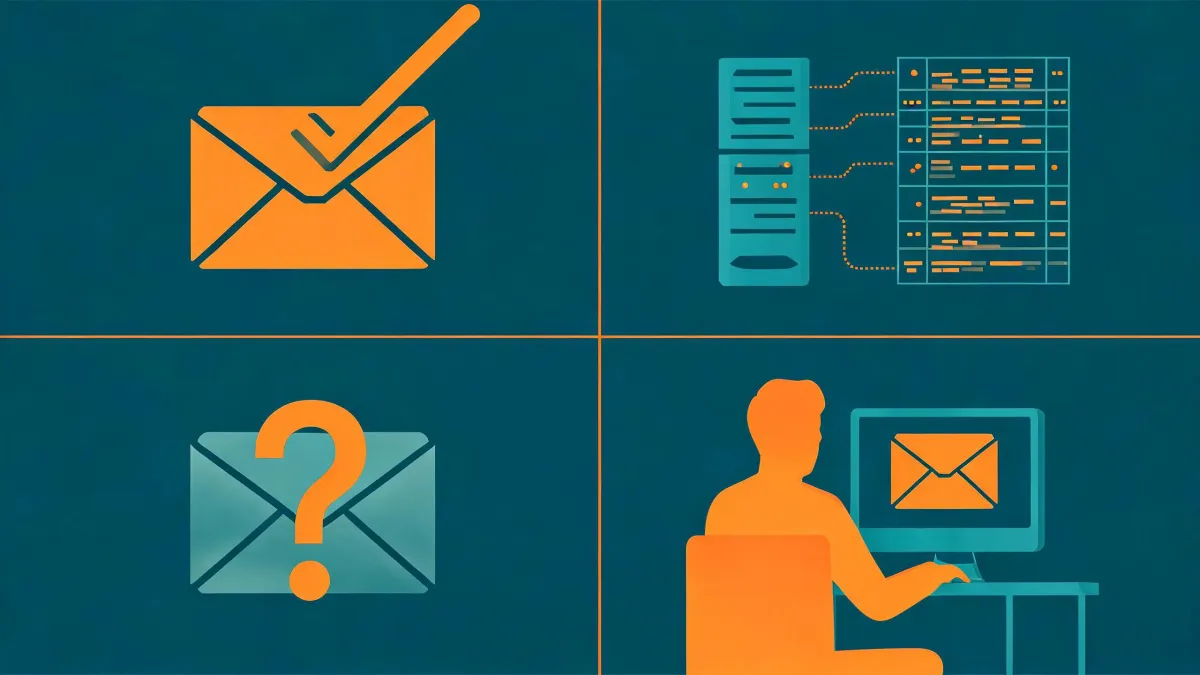
-
Why I Get This Question a Lot
-
What Is Findymail? The Email Finder Tool, Minus the Marketing
-
Findymail Email Verification: The Part Most Teams Misread
-
LinkedIn Sales Navigator Scraper: What It Is and What It Shouldn't Be
-
API Company Data: Why the Data Is Only as Good as the Request
-
What Is LinkedIn Automation Free Trial, and When Should a B2B Sales Team Use It?
-
When Findymail Is Not the Right Tool
Findymail is a B2B email finder and verification tool for sales teams. You give it a name and a company domain, and it returns the email addresses most likely to belong to that person. Then it checks those addresses before they go into your outreach sequence. That is the core product. The parts that get all the attention—the LinkedIn Sales Navigator workflow, the API company data, the lead database—are all variations of one job: find the person, check the email, send the message to the right place.
If you only read one thing, read this: Findymail is most useful when your list is already targeted but your email data is messy. It is not a magic volume machine. It won't make prospecting fun. It will reduce the number of bounces, wrong addresses, and wasted follow-ups.
Why I Get This Question a Lot
I work on the quality side of B2B data. Before a lead list reaches customers, my team reviews it. In Q1 2024, I rejected about one in ten first deliveries because verification dates were too old or source fields were missing. That's why sales teams ask me about Findymail: they want to know if the tool can prevent the kind of bad data I spend my days catching.
The answer is mostly yes. But it depends on how you use it.
What Is Findymail? The Email Finder Tool, Minus the Marketing
Findymail does three things.
First, it finds emails. You type in a person's name and company domain, and it returns candidate addresses. Second, it verifies them. It checks syntax, domain records, and mailbox status. Third, it connects to the rest of your workflow. There's a browser extension, a lead database, and an API that returns email and company data.
The order matters. Find emails first, verify them second, integrate third. Most teams go straight to integrations and skip the verification question. That's a mistake.
Findymail Email Verification: The Part Most Teams Misread
What most people don't realize is that email verification and email deliverability are different measurements. Verification tells you whether an address exists and can receive mail. Deliverability tells you whether your email lands in the inbox, promotions tab, or spam folder. A tool like Findymail can improve the first one. It cannot control the second.
Here's something vendors won't tell you: the biggest reason outreach fails is not bad syntax. It's a list full of valid addresses that don't fit your ideal customer profile. Verification catches typos, dead domains, and role inboxes. It doesn't catch the ones that are technically real but never going to reply.
The counterintuitive part? The finder is not the main value. The verification step is. A list of 100 checked addresses will outperform a list of 1,000 guessed addresses, because the guessing tool can't tell you which 900 are wrong.
When a vendor can't explain what verification actually checks, that's a red flag. A simple checklist—source, verification date, domain format—is the cheapest insurance. I repeat one sentence to every sales team: 5 minutes of verification beats 5 days of correction.
LinkedIn Sales Navigator Scraper: What It Is and What It Shouldn't Be
When people type LinkedIn Sales Navigator scraper, they usually mean a tool that pulls names, titles, and companies out of Sales Navigator search results and turns them into a lead list. Findymail does something close: you use it alongside Sales Navigator to capture a lead, and it resolves a verified work email. But it is not an autonomous scraper that harvests thousands of profiles overnight. If that is the workflow you want, keep looking.
That boundary is worth keeping. LinkedIn asks users to follow its terms. A tool that quietly scrapes around the rules is a compliance risk, not a growth strategy. Findymail works with Sales Navigator rather than fighting it.
Sales Navigator is a search layer. Findymail is a resolution layer. You need both.
API Company Data: Why the Data Is Only as Good as the Request
API company data sounds like a feature. In practice, it's a workflow decision. Findymail's API can return email addresses, verification statuses, and company information, which makes it useful if you want to build or update a CRM automation.
I went back and forth between building an internal enrichment pipeline and using the API for two weeks. Building in-house felt safer. The tradeoff was maintenance: parsing responses, handling rate limits, and fixing errors. In the end, the API won because we didn't want to own email verification infrastructure.
Looking back, I should have trialed the API before building anything. At the time, I thought internal code would be simpler. It wasn't. Trial the API with a small sample from your own database. That will show you more than any sales call.
What Is LinkedIn Automation Free Trial, and When Should a B2B Sales Team Use It?
LinkedIn automation free trials are limited-time credits that let you test an automation, enrichment, or data tool without a contract. They sound like a no-brainer. The ones who get value treat the trial as a quality audit, not a demo.
Use a free trial when:
- You have a defined ideal customer profile and a list of 100–200 target accounts.
- You're measuring replies and meetings booked, not just emails sent.
- Your outreach sequence is stable enough that list quality is the main variable.
That last one is the key. If your message changes every week, a free trial won't tell you whether the tool works. It will tell you whether the copy works, and that's a different test.
If you're on the fence about Findymail, use the trial as a quality audit. Take 100 known emails from your existing customers, run them through verification, and see what comes back. Then you'll have a baseline before you trust it on new names.
When Findymail Is Not the Right Tool
Findymail is not the right choice for every team. If you need to scrape huge volumes of profile data, you'll be disappointed. If you expect an email finder to fix your domain reputation, that's not what it does. And if your plan is to send unsolicited email to a purchased list, no verification tool makes that compliant.
Per FTC guidelines (ftc.gov, accessed December 15, 2024), commercial email must include a truthful subject line, a valid postal address, and a working opt-out process. Those requirements do not change based on where you got the address.
One more boundary: Findymail removes busywork. It does not remove the sales conversation. The tool gets your email to a real address. The rep still has to say something worth answering.
Bottom line: use Findymail for the part of prospecting that needs checking—finding and verifying the email. If you keep that as the goal, the Sales Navigator integration, the API, and the free trial all make sense. If you treat it as a replacement for targeting and good copy, you'll end up with a cleaner list and the exact same mediocre reply rate.

Julian Hartwell
Julian Hartwell is an independent B2B sales intelligence analyst covering contact databases, company data, decision-maker profiles, direct dials, prospect lists, and buying signals. He applies the ISO/IEC 25012 data-quality model while examining field accuracy, coverage, freshness, duplicate rate, match confidence, and source transparency. His evidence-led guides help revenue teams compare prospecting platforms, define acceptable data thresholds, and build account lists that support reliable territory planning and outreach.